
Same Room, Different Views: What an Ikigai Diagram Taught Me About How We See

Six or seven years ago, an Indian facilitator asked me if I could deliver a workshop on ikigai.
“I think it would be fascinating to have a Japanese facilitator introduce ikigai firsthand,” she said. She then told me about a bestselling book on ikigai that had become popular in her community.
But when I saw the diagram on the back cover, I was stunned. I turned down the offer.
To me, ikigai is a holistic concept in which many different meanings and aspects are intertwined. So I couldn’t help wondering: Why try to break it down into four separate circles?
Yet my surprise soon turned into curiosity. If the book had become a worldwide bestseller, the diagram must have made sense—perhaps even felt intuitive—to many people outside Japanese culture.
I began reading academic papers, wondering whether the way we perceive and understand things might differ across cultures. When I came across a paper titled “Attending Holistically Versus Analytically: Comparing the Context Sensitivity of Japanese and Americans,” I felt that I had found an important clue.
The paper described a fascinating experiment. Japanese and American participants were shown the same animated underwater scenes and asked to describe what they had seen.
Interestingly, Japanese participants tended to mention not only the fish themselves, but also the background and the relationships between the fish. American participants, by contrast, tended to focus more on the main fish.
In a follow-up test, the researchers changed the background and showed participants the same fish again. American participants were largely unaffected by the change and were still able to recognize the fish accurately. Japanese participants, however, made more mistakes when the background was different.
This suggests that Japanese participants may have remembered the fish and its background as part of the same scene.
After learning about these cultural differences, I began to understand why the ikigai diagram might have been so widely accepted.
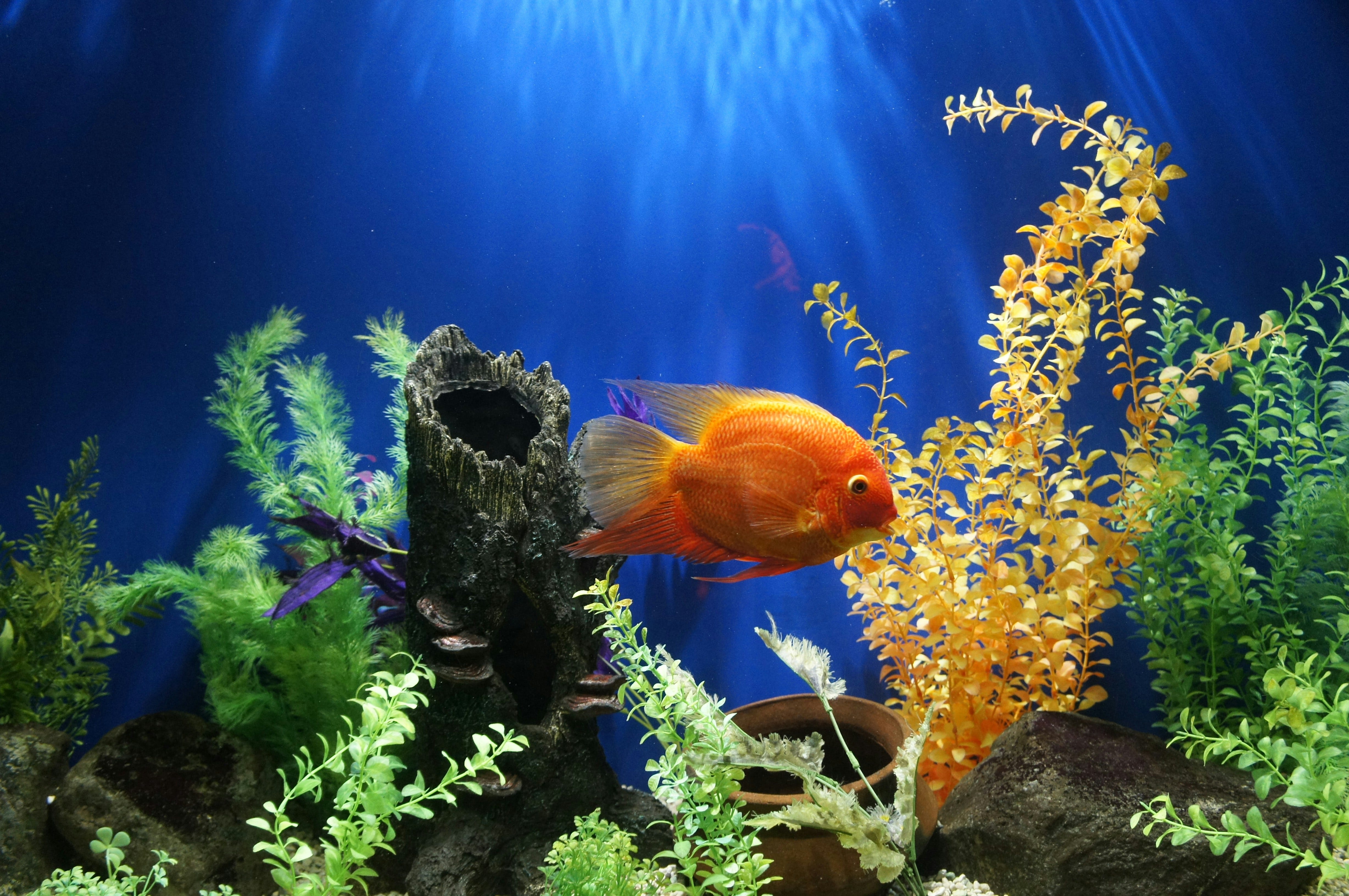
To me, the concept of ikigai is more like the aquarium in this experiment. The tank, the movement of the water, air bubbles, aquatic plants and algae, the light streaming in, the sand, the fish, and the sparkle on the water are all intertwined. Together, they form a single, inseparable scene.
It cannot be neatly divided into separate categories such as:
the fish
the tank
the aquatic plants
the sand
Personally, whenever I try to categorize something, I feel that something important slips through the gaps. And sometimes, what gets left out is precisely what deserves the most attention. That may be why I tend to understand things more holistically.
If we divide everything into categories, where does the sparkle on the water belong?
That was what didn’t sit right with me.
I feel the same way about the Ikigai diagram.
For example, someone might say, “I love discovering great coffee. Visiting different cafés and trying new flavors is one of my ikigai.” But where, within the four circles, should we place the quiet joy of savoring a beautiful aroma?
Travel is also one of my ikigai. But no one needs me to travel. So where does that fit within the circle labeled “What the world needs”?
How does this tendency to understand things as a whole show up in everyday practice?
For example, presentation materials created by Japanese people often begin with an overview that shows how all the pieces fit together. I’m no exception. When I facilitate a corporate training session or workshop, I usually begin by showing participants the overall structure of the program before moving into the individual sections.
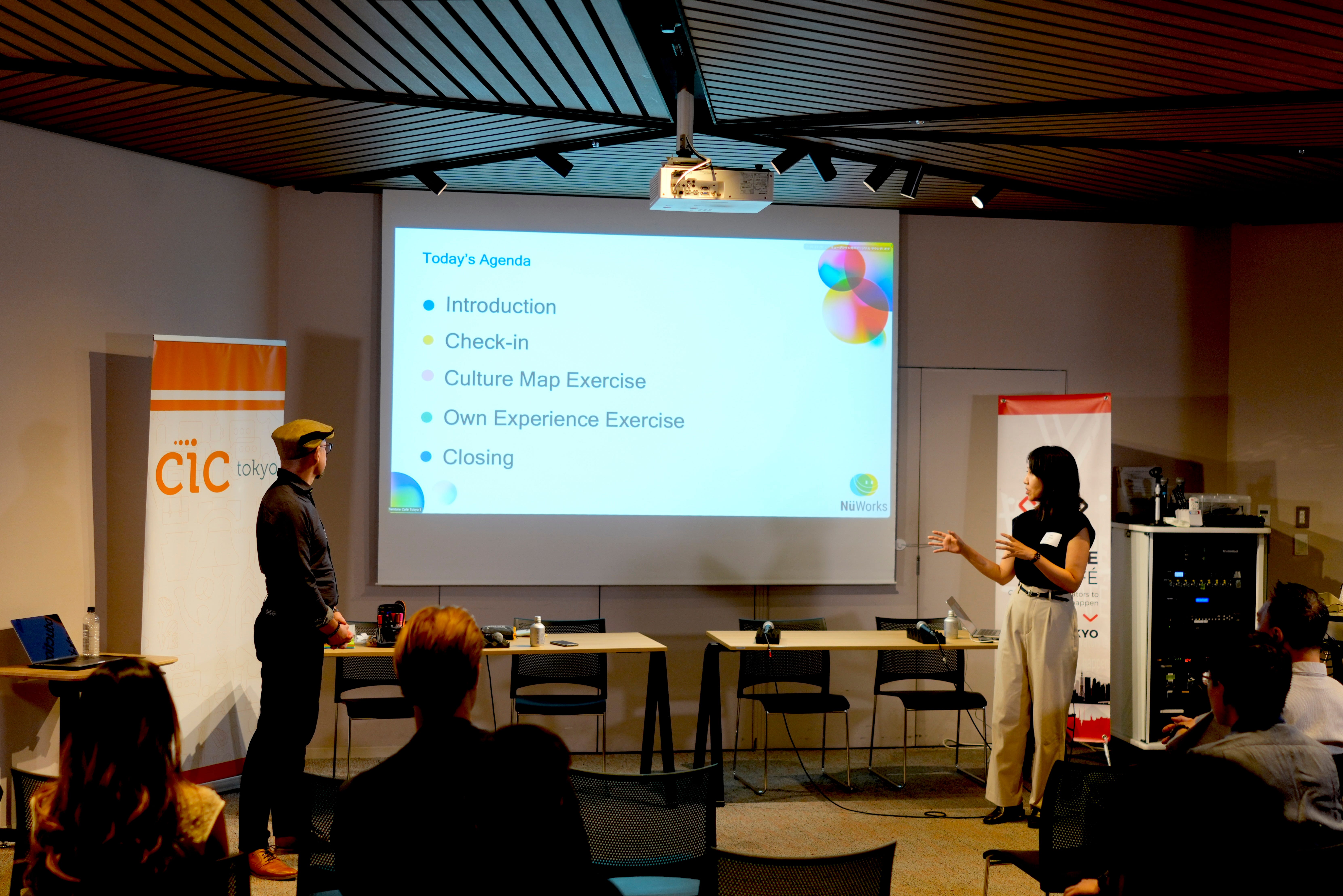
I sometimes notice the opposite when working on projects in the UK. While reviewing documents or attending meetings, I occasionally find myself wondering, “Why are we talking about this now?”
I may understand the content itself, but without seeing how it fits into the bigger picture, I can find it difficult to make sense of why it is being discussed at that particular moment. Once, a UK-based company asked me to deliver a leadership training session for its employees in Japan. At first, I assumed it was a standalone session. It was only after several conversations with my points of contact that I discovered it was actually part of a program lasting several months.
In Japan, it is more common to explain the overall program first and then introduce each individual training session as one part of it.
To return to the aquarium metaphor, we tend to feel that we understand something more fully when we are shown the whole aquarium first and then invited to focus on the fish.
If someone suddenly starts talking about the fish without first showing us the aquarium, we may understand the fish itself, but still find ourselves wondering, “Why are we talking about this now?”
Another illuminating study I came across was “Placing the Face in Context: Cultural Differences in the Perception of Facial Emotion”, published in the Journal of Personality and Social Psychology.
In one of the experiments, the researchers used eye-tracking technology to compare how Japanese and American participants viewed images. While American participants tended to focus on the main object, Japanese participants often shifted their gaze to the surrounding context after looking at the object for a few seconds.
In my own case, during a workshop, when someone begins to speak, I naturally find myself looking not only at the speaker, but also taking in the facial expressions and atmosphere of the people around them.
It made me wonder: Could even the way we look at the same scene differ across cultures?
The paper also suggested that Japanese participants tended to read a person’s emotions not only from their facial expression, but also from the expressions of the people around them. American participants, by contrast, relied more on the speaker’s own face.
I’ve had the opportunity to co-facilitate with three different American facilitators on separate occasions. Looking back, I wonder whether, even while facilitating the same workshop together, each of us may have been noticing—and making sense of—entirely different things.
What I want to say is not simply, “Japanese and American people are different in these ways.”
As cultural differences continually remind us, there are always other ways of seeing, interpreting, and responding to the same situation.
Since learning about this difference, I have become more intentional about shifting my attention during workshops. Sometimes I remind myself, “This time, try focusing a little more on the speaker.”
Reflecting afterward with co-facilitators from different cultural backgrounds has also become even more meaningful—and more enjoyable.
Finally, let’s return to the Ikigai diagram from the beginning of this article.
For a moment, set the diagram aside. Jot down anything you love—things that light you up, bring you quiet joy, or simply make you smile. Follow your heart, and write down as many as you can. Do you notice anything that slips through the four circles, yet still feels like an essential part of your ikigai—a quiet sparkle of joy

?
And if you happen to be Japanese, try the opposite experiment. Deliberately focus on the four circles—What you love, What you are good at, What you can be paid for, and What the world needs—and write down whatever comes to mind.
Both seeing the whole and breaking things into parts reveal something different.
Perhaps learning about another culture is learning to see through another person’s eyes, if only for a moment.
Thank you for your reading ! New here? A few reader favorites to start with:
Change in Order Not to Change: The Quiet Power of Japanese Kaizen
The Silent Language of Japanese Meetings: A Facilitator’s Guide to Honne and Tatemae
Why Japanese People Almost Never Give 10 Out of 10 — The Endless Path Behind Quiet Mastery
📩 Between Silence and Dialogue explores Japanese culture and the art of facilitation — how ancient wisdom can transform the way we lead, listen、and connect. Join readers from around the world, for free!